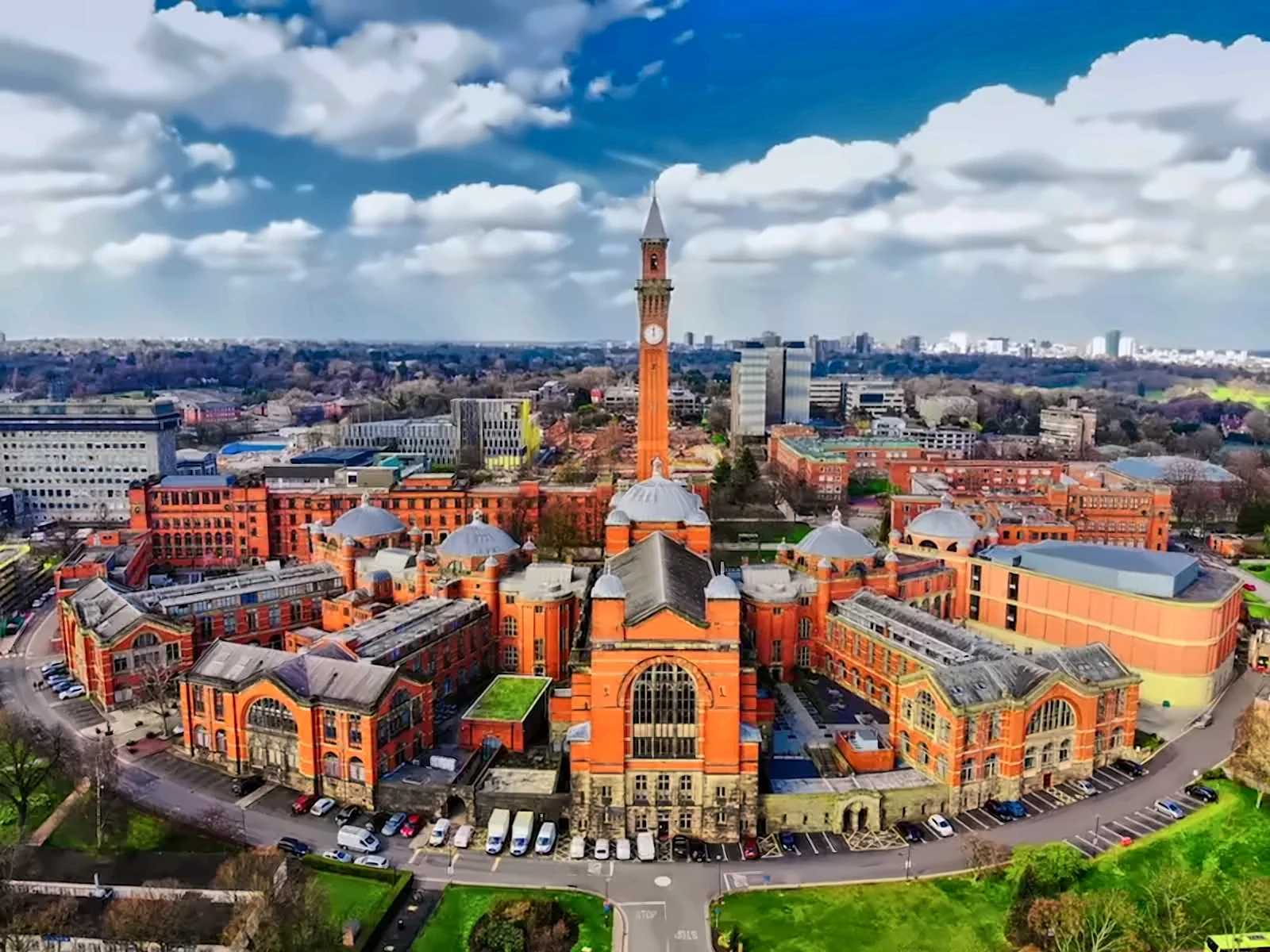
Bio-Inspired Fluid-Structure Interaction Laboratory
Aerospace Engineering, University of Birmingham

Learning from nature’s flyers and swimmers
We combine high-fidelity simulation, supercomputing and data-driven modelling to uncover how flexible wings, fins and seeds interact with air and water, and turn those insights into better drones, underwater vehicles and energy harvesters.

About the labWelcome to the Bio-inspired Fluid-Structure Interaction Laboratory (BioFSILab) in Aerospace Engineering at the University of Birmingham. We study how flexible structures and moving bodies interact with the unsteady flows around them, taking inspiration from flapping insects and birds, swimming squid and other natural flyers and swimmers. Our work combines high-fidelity fluid-structure interaction simulations, development of GPU-accelerated and open-source flow solvers and data-driven reduced-order models with experiments carried out alongside our collaborators in the UK and abroad. We use these insights to design better micro air vehicles, soft underwater robots and marine renewable energy devices.
Research Themes
-
 Flapping Wing Aerodynamics
Vortex formation, wake transitions and the route to chaos behind flapping wings.
-
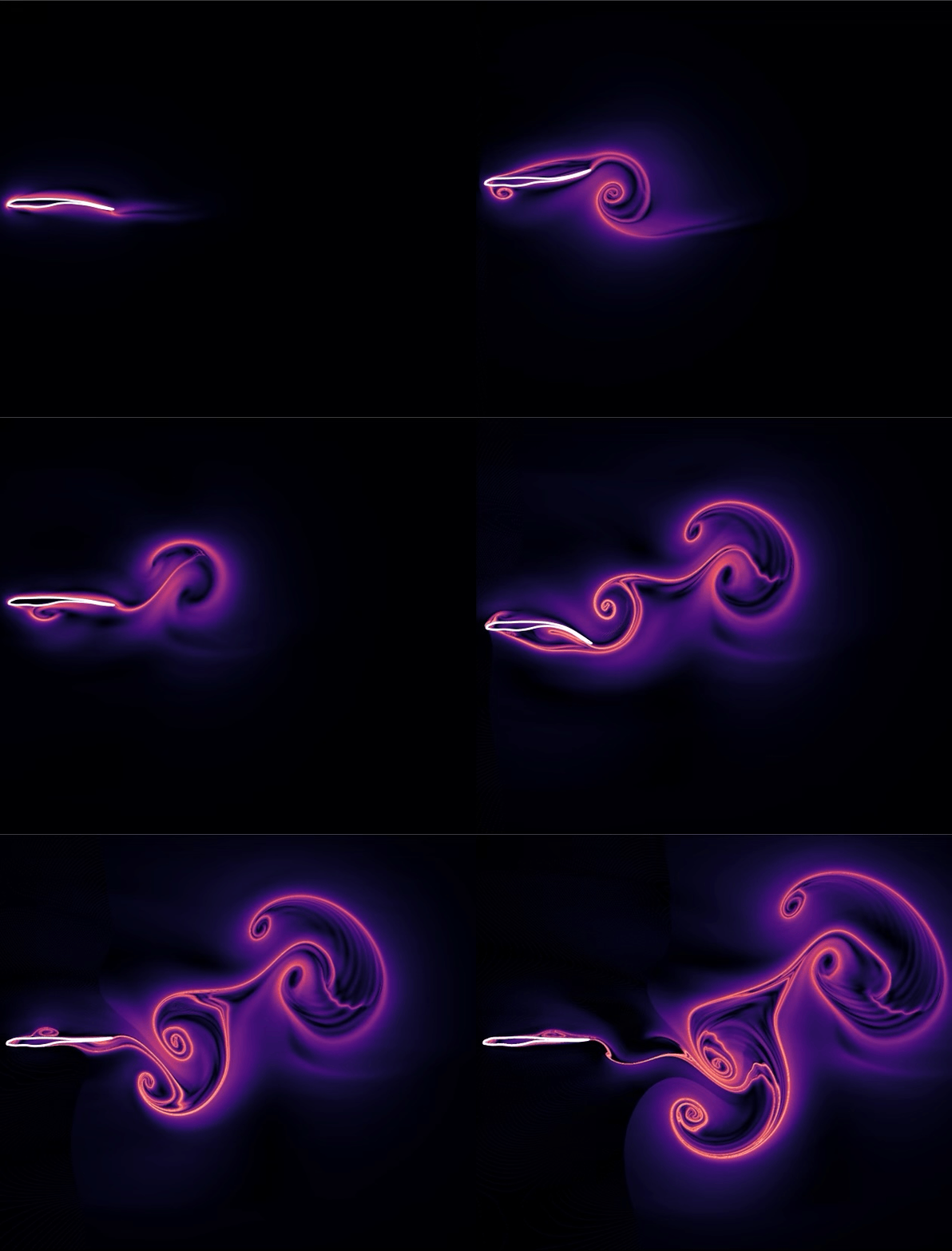 Active & Passive Morphing Wings
Flexible and shape-changing wings that tame wakes and adapt to flight conditions.
-
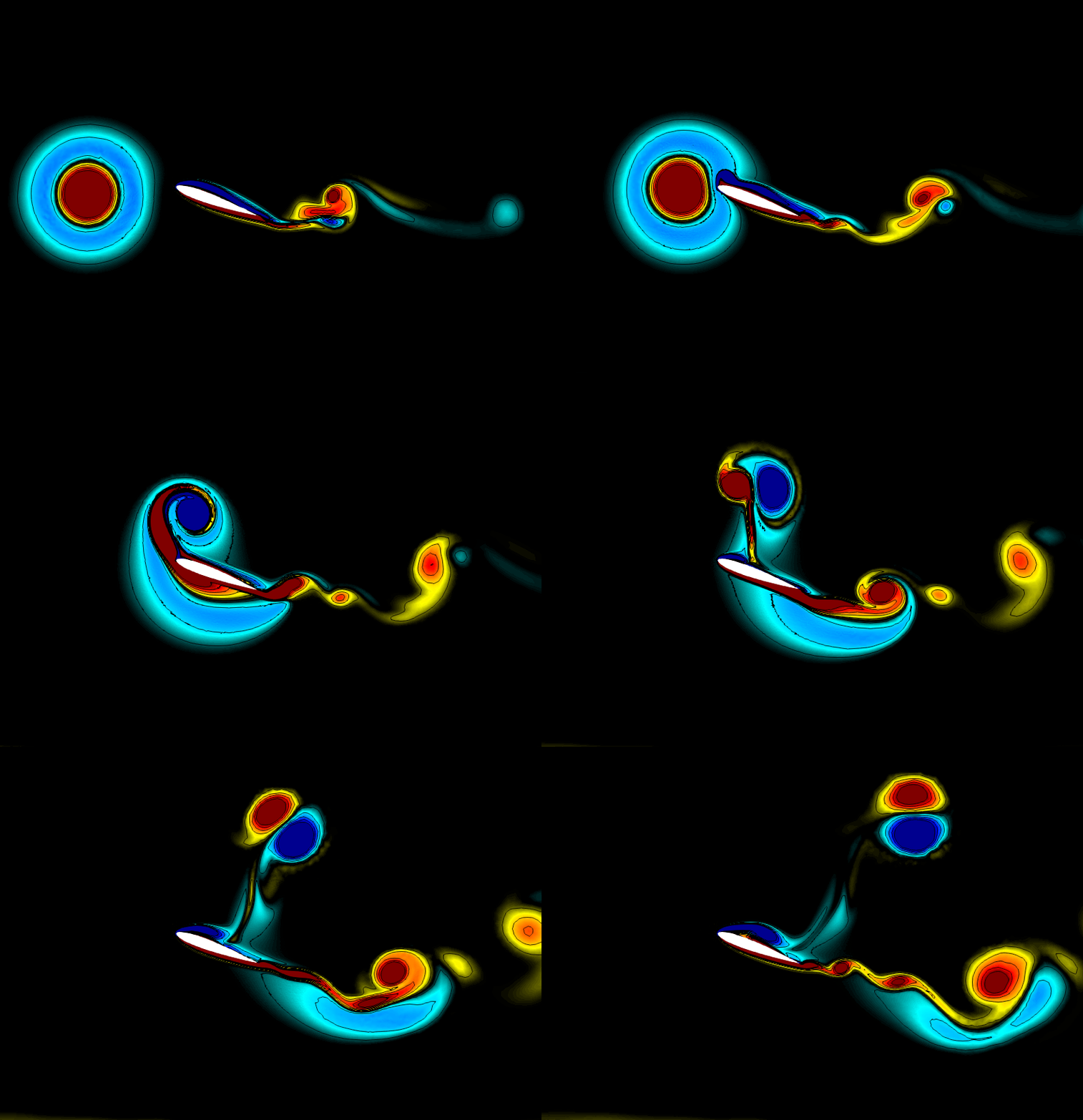 Gust Response of Passive Flyers
How free-falling and gliding bodies ride gusts to stay aloft for longer.
-
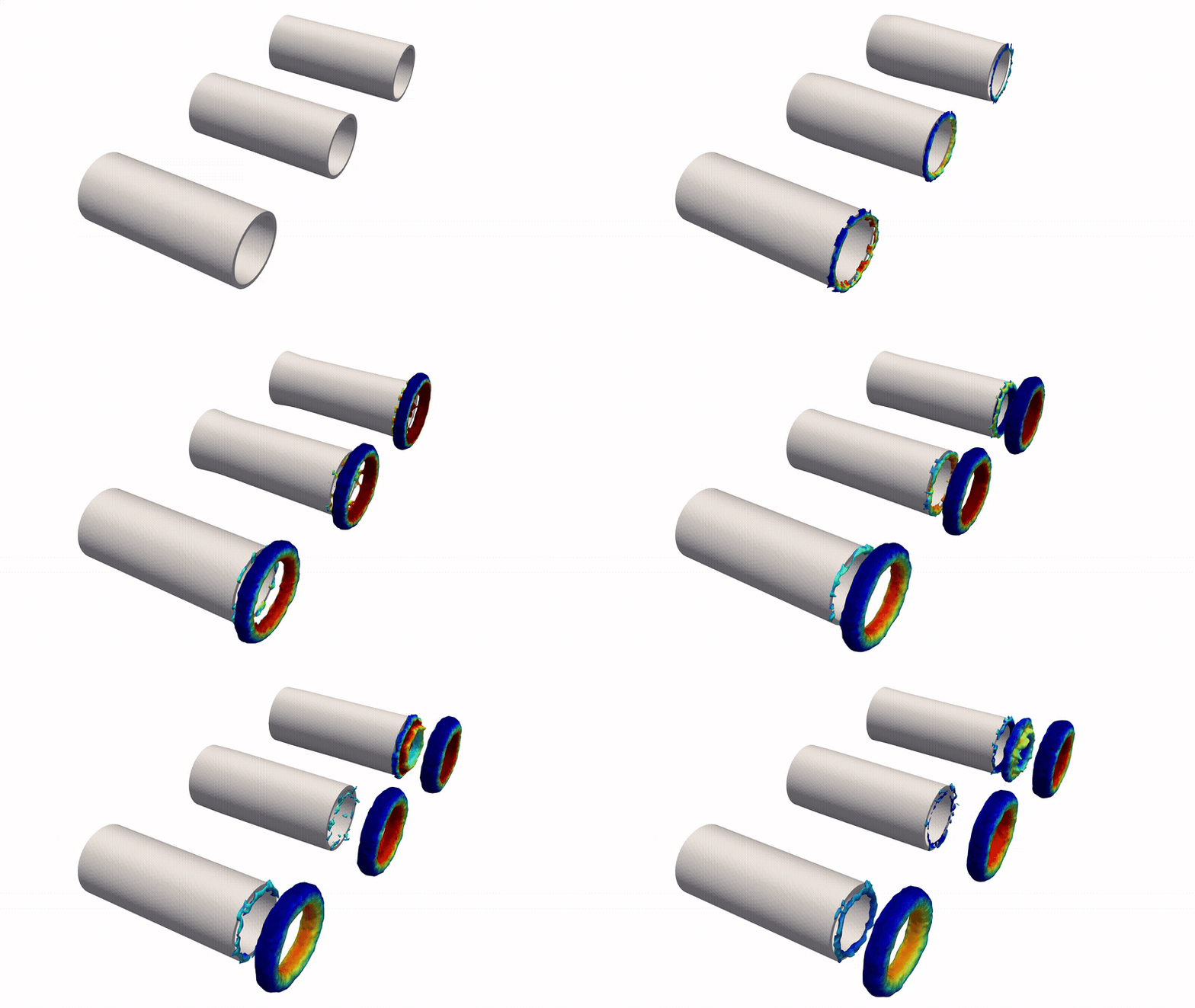 Squid-Inspired Jet Propulsion
Flexible nozzles that store and release elastic energy to amplify pulsed jets.
-
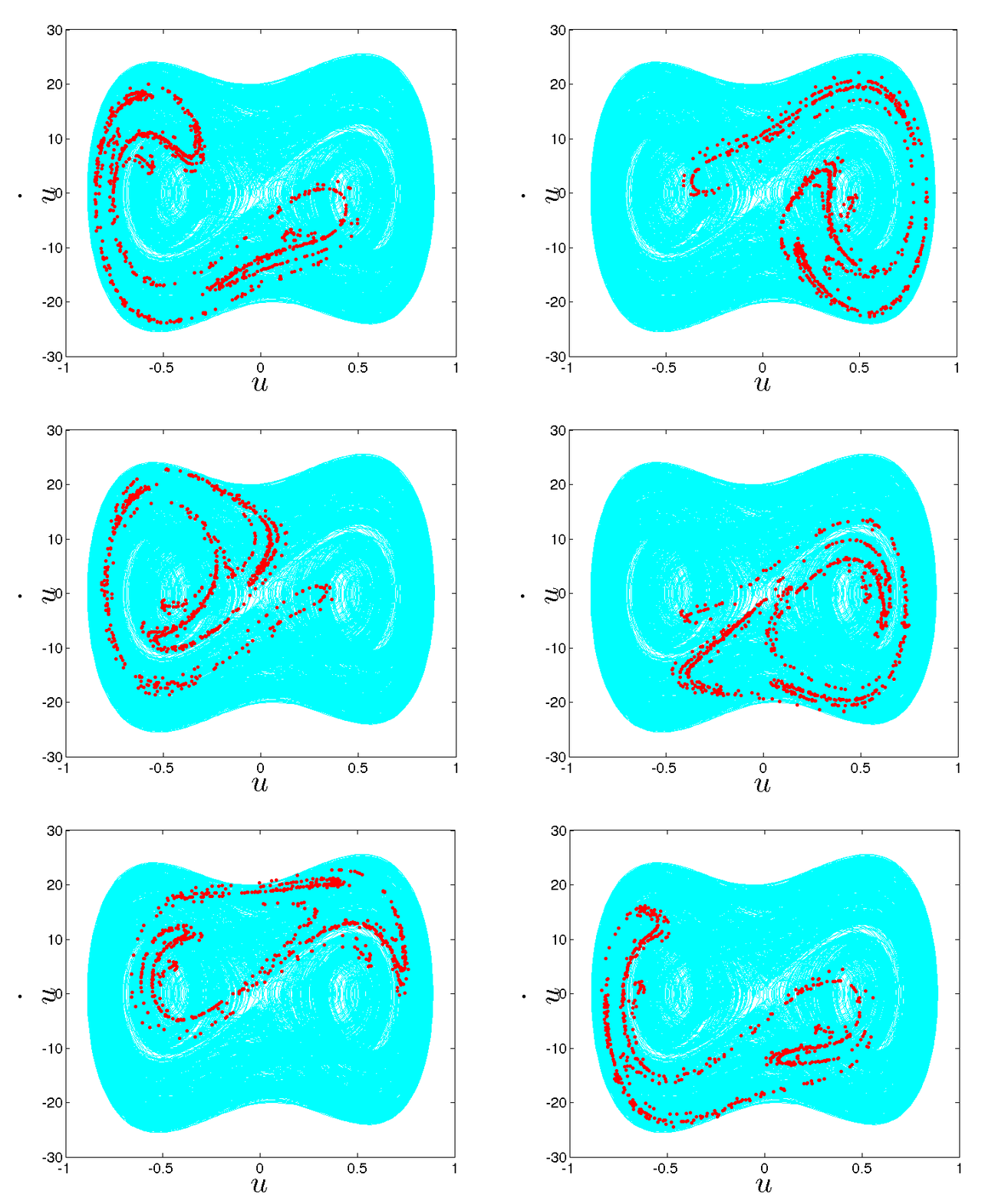 Aeroelasticity & Flow-Induced Vibrations
Flutter, stall-induced oscillations, vortex-induced vibrations and their control.
-
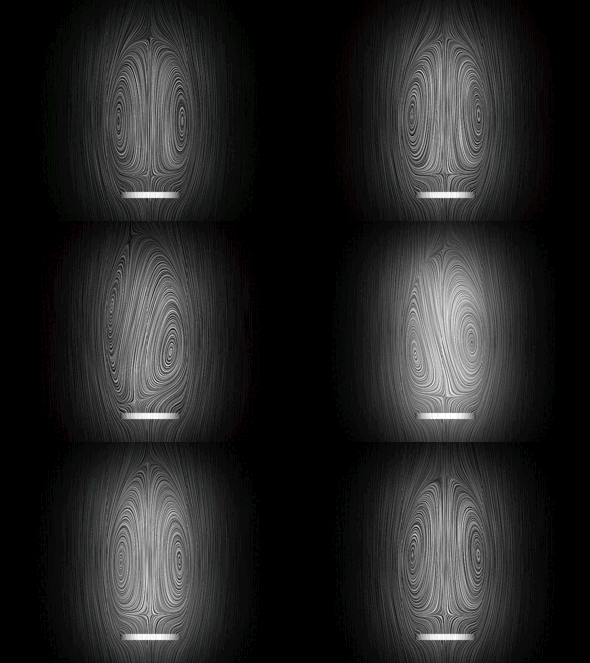 Permeable-Body Aerodynamics
How flow through porous plates and permeable disks reshapes wakes and drag.
-
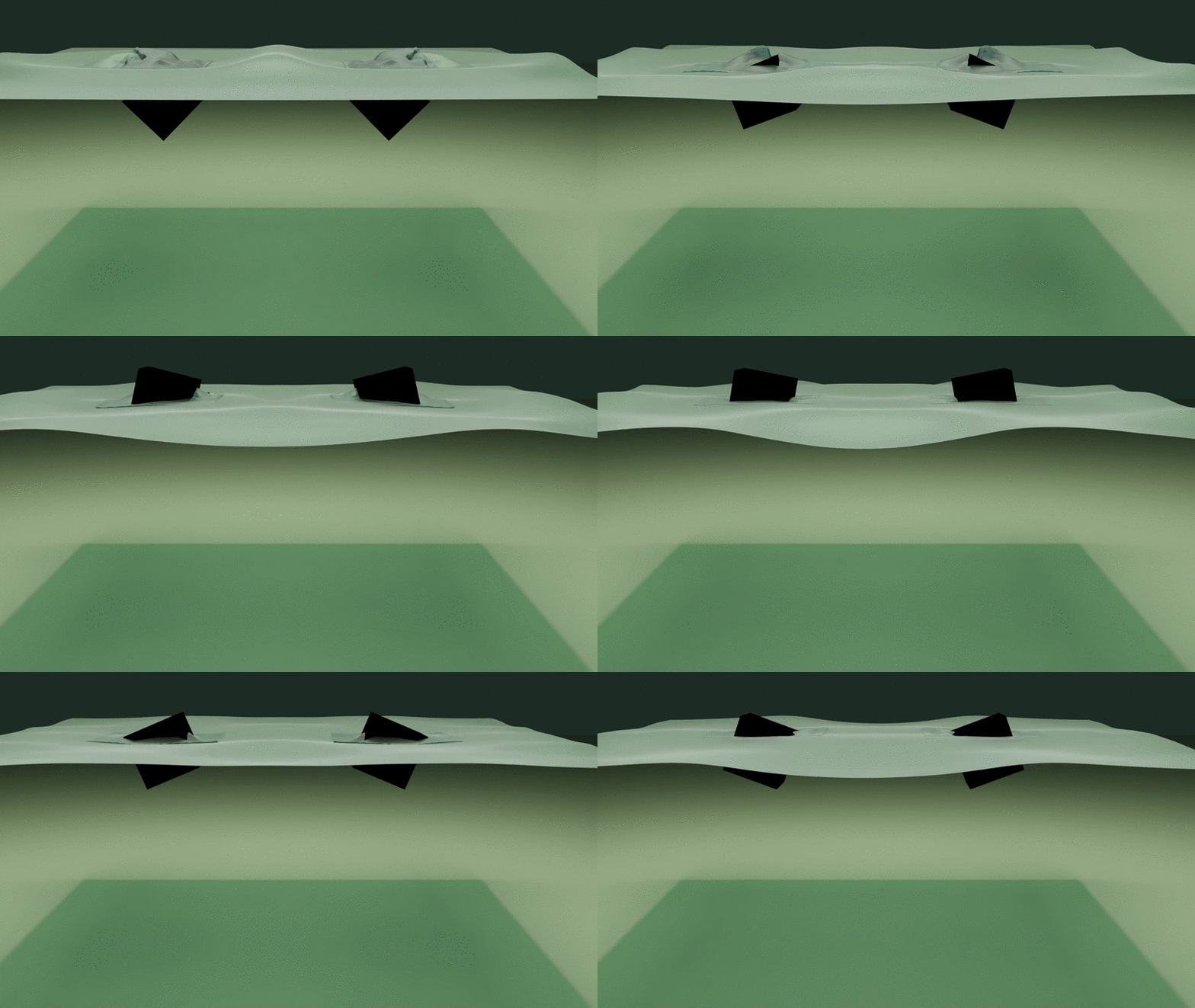 Wave-Structure Interaction & Energy Harvesting
Flexible structures that interact with waves and flows to harvest energy.
-
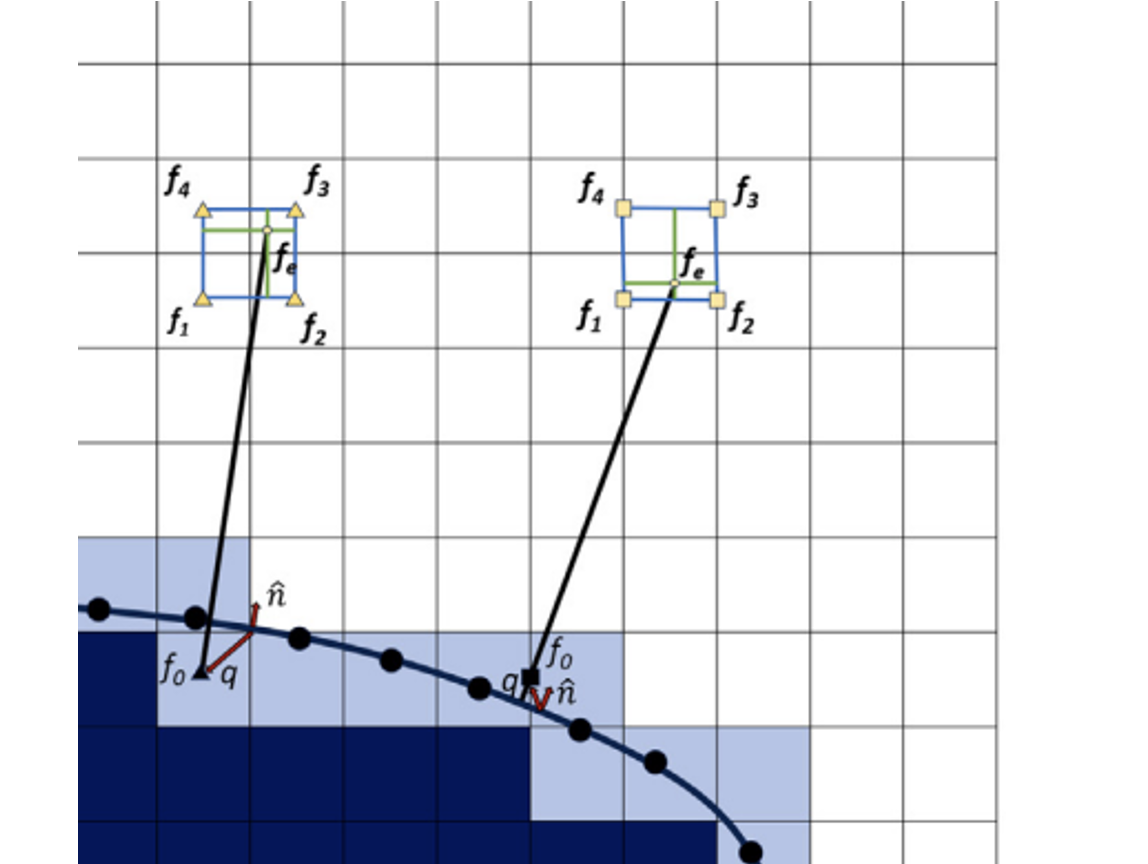 GPU Solvers & Data-Driven Modelling
GPU-accelerated immersed-boundary solvers, reduced-order models and optimisation.
Royal Society Newton International Fellowship 2027
Outstanding early-career researchers based outside the UK are invited to get in touch about fellowship opportunities in computational fluid dynamics, fluid–structure interaction and multiphysics modelling with BioFSILab at the University of Birmingham.
The Royal Society call is expected to close in March 2027 (exact dates to be confirmed). Please get in touch early so there is time to develop a strong application.
Recent News
- Nov 2026BioFSILab will present its latest research at the 79th APS Division of Fluid Dynamics Annual Meeting in Orlando, USA (22–24 November), including butterfly flight aerodynamics, passively morphing foils in gusty flows and data-driven modelling of vortex-induced vibrations.
- Oct 2026BioFSILab welcomes two new PhD students, Lois Martin and Ethan Warman, both of whom started with the group as undergraduate researchers. Ethan will work on data-driven optimisation, control and reduced-order modelling of fluid-structure interaction problems, and Lois on flow in anisotropic media, directional solidification and defect formation, co-supervised by Dr Nils Warnken and Prof Nick Green. Read more.
- Oct 2026Welcome on board, Harrison Buckner! Harrison has started his PhD at the University of Birmingham, co-supervised by Dr Jun Wu and Dr Chandan Bose, researching a bio-inspired active morphing wingtip for next-generation aircraft. Read more.
- Aug 2026Our paper “Effect of transverse gust on free-falling plates” has been published in the Journal of Fluid Mechanics, in collaboration with the University of Edinburgh.
- Jul 2026Our work on GPU-optimised integration of immersed-boundary and overset-mesh methods for moving-boundary problems has been published in Computer Methods in Applied Mechanics and Engineering, with collaborators at IIT Kharagpur.